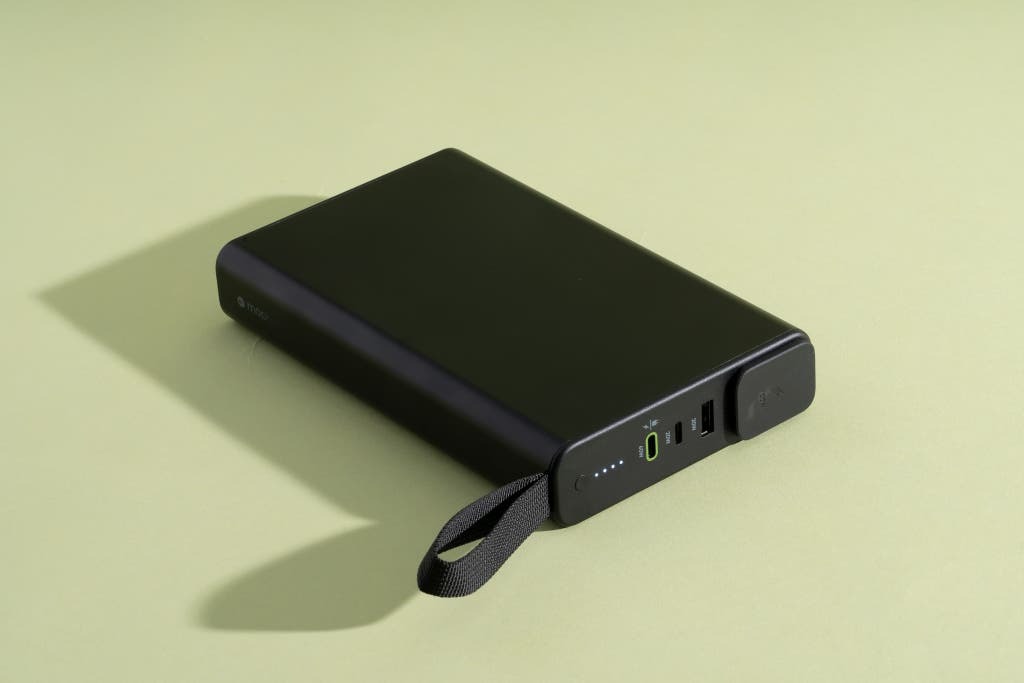
Power That Keeps Pace: Understanding the Modern Portable Charger
The portable charger has become one of the most significant instruments of contemporary digital life without much noise. It was a decade ago when people used to carry it only during long trips. Nowadays, it has become a daily companion due to the unceasing connectivity. I have been writing and researching on the topic of consumer technology for over a decade and have witnessed how the dependency on mobile devices has transformed the expectations of power access. Phones are not used sometimes, they are on all day long, handling communication, learning, navigation and work.
My personal experience showed that the true worth of a portable charger was revealed on long and unpredictable days. Be it commuting between meetings, classes, or travel destinations, the backup power was a reliable source of power that eliminated the anxiety of seeing the battery depleting at the wrong time.
Power Bank Technology Beyond Simple Battery Storage
A power bank can be confused with a simple battery pack, however, the current models are much more complicated to engineer. Regulated circuits are included in a quality power bank to regulate the flow of current, temperature, and the protection of the devices connected. These factors define the safety and efficiency of power delivery.
Over the years of practical experimentation, I have come to understand that regular production is more important than the capacity as it is claimed to be. An effective power bank provides consistent power without any abrupt power interruptions or overheating. Such reliability is particularly significant to students and professionals who require constant access to devices all day long.
Portable Charger Use in Academic and Professional Settings
In the case of academic users, power reliability is a direct contributor to productivity. All research platforms, digital notes, video lectures, and collaboration tools rely on the consistent work of the device. A portable charger is used to make sure that power constraints do not disrupt learning.
The same is applicable in professional settings. Presentations, remote work, and communication applications demand the use of devices that are active over a long period of time. A power bank has been useful in my workflow because it has avoided inconveniences in the course of the long working hours and has also served to keep me focused without worrying about the charging points.
Power Bank Design and Practical Everyday Carry
Design is a significant factor in the inclusion of a power bank in everyday life. A bulky or awkward portable charger will be left behind even when it has a high capacity. Practical design is concerned with balance, portability and ease of use.
As time went by, I realized that power banks that are slim and well weighted are used more frequently. A portable charger that can be easily placed in a bag or a pocket turns into a habit and not an additional thing to keep in mind. This practical usability is not usually given much attention yet it directly influences long-term satisfaction.
Charging Efficiency and Real-World Performance
Performance is not determined by capacity numbers. Conversion to energy results in energy loss, implying that not all stored power goes to the device. The efficiency of charging defines the number of useful charges that a power bank can deliver.
In a real-life test, smaller yet more efficient power banks tend to be better than larger power banks with inefficient energy management. This performance is important when users need to depend on the predictable performance instead of the theoretical specifications. A reliable portable charger will enable a more efficient planning process and less uncertainty on the busiest days.
Safety, Heat Control, and Device Protection
A good power bank is characterized by safety. The poorly designed portable chargers can produce excessive heat or provide unstable current, which can influence the batteries of the devices in the long term. Quality designs involve anti-overcharge, anti-short circuit and anti-overheating.
Based on prolonged usage, it is evident when a power bank is made with safety in mind. The ability to operate at cooler temperatures, maintain a steady charge rate, and have stable performance is a sign of good internal protection systems. These characteristics lead to the long life of the device and peace of mind of the user.
Portable Charger as Part of a Mobile Lifestyle
Modern routines are characterized by mobility. Individuals learn, labor, and interact in various places as opposed to fixed locations. A portable charger helps to maintain this lifestyle by increasing the time of devices without imposing behavioral changes.
A power bank can be used during a trip or long campus days when it is necessary not to find a place to charge the device or to organize a break according to the possibility to charge the device. This freedom enables users to concentrate on experiences and tasks and not logistics.
Final Thoughts
The portable charger has become a necessity in contemporary life as opposed to a secondary device. A reliable power bank helps to be productive, learn, and move as it keeps the devices active wherever the day takes them. Based on ten years of professional writing and practical experience, it is evident that quality, efficiency, and safety are the true values of portable charging. A good portable charger is not a luxury to the students, professionals, or even the ordinary users but a solid base of staying connected in a world that depends on power.